
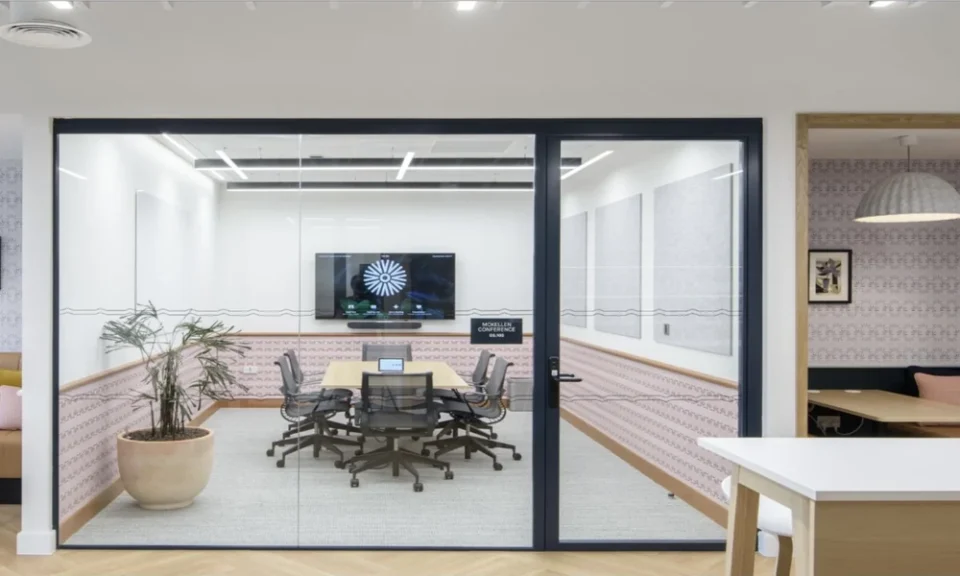
Glass markerboards moved into corporate interiors because they combine a durable, nonporous writing surface with a clean, modern appearance that fits contemporary office design. As workplaces shifted toward collaboration spaces, glass boards became both a functional tool and a design element.
Hybrid work has become common among U.S. workers whose jobs can be done remotely (Pew Research Center).
What is a glass markerboard?
A glass markerboard is a writing surface made from tempered glass, typically back-painted or backed with a colored layer, and mounted to a wall or frame. Users write with dry-erase markers, and the surface wipes clean.
Color and magnetic options
Glass boards are available in white and in a range of colors. Some include a magnetic backing, allowing magnets to hold papers to the surface. Frameless designs with standoff mounts give glass boards a floating appearance on the wall.
How glass fits into a surface lineup
Glass markerboards sit alongside porcelain, natural cork, and fabric surfaces in commercial visual display lines, giving designers one source for writing and tackable finishes (ASI Visual Display Products).
Why did offices shift toward glass writing surfaces?
Offices shifted toward glass writing surfaces because workplace design moved away from closed offices toward open collaboration areas, huddle rooms, and flexible spaces where the appearance of every surface matters. Traditional framed whiteboards can look utilitarian in design-forward interiors.
Factors behind the shift
- Growth of collaboration and huddle spaces
- Design emphasis on clean lines and minimal hardware
- Desire for durable, easy-to-clean surfaces
- Branding opportunities with custom colors
- Integration with glass walls and modern finishes
Glass boards also signal investment in the workplace. Employers competing for talent use design details to create offices people want to use.
How does glass perform as a writing surface?
Glass performs as a writing surface with excellent erasability and strong resistance to staining and ghosting. The nonporous surface does not absorb marker ink, so boards stay clean with regular wiping.
Performance characteristics
- Nonporous surface that resists staining
- Strong erasability with standard dry-erase markers
- Resistance to scratches in normal use
- Compatibility with a range of glass cleaners
- Consistent appearance over a long service life
What mounting options are available for glass boards?
Mounting options for glass boards include standoff hardware, hidden bracket systems, and framed installations. Standoff mounts give a floating look, while hidden brackets create a flush, clean profile.
Weight and wall support
Installation requires care. Glass boards are heavier than painted or porcelain boards of the same size, and wall construction must support the weight. Installers should follow manufacturer instructions and confirm backing or blocking where needed.
How do glass boards fit into collaboration spaces?
Glass boards fit into collaboration spaces by providing large, visible writing areas that teams use for brainstorming, planning, and visual thinking. Large-format glass walls can turn an entire surface into a shared workspace.
Common placements in offices
- Huddle rooms and small meeting spaces
- Conference rooms alongside video displays
- Open collaboration zones and team neighborhoods
- Executive offices and private workspaces
- Innovation labs and project rooms
Hybrid meetings add another consideration. Boards positioned where cameras can capture them allow remote participants to follow along.
What color options suit corporate environments?
Color options for glass boards range from classic white to brand colors, neutrals, and dark tones. White offers the highest contrast for standard markers, while darker colors may require specialty markers for visibility.
Choosing colors for visibility
Designers often choose white or light neutrals for high-use boards and reserve bold colors for accent walls or branding. Frosted and tinted options can soften the appearance in spaces where boards double as design features.
How do federal and institutional workplaces approach design standards?
Federal and institutional workplaces approach design standards by balancing function, durability, and cost with long-term facility plans. Workplace design resources for federal agencies are published alongside management of a large federal real estate portfolio (U.S. General Services Administration).
Durability and long-term value
Durable finishes that minimize replacement and maintenance support long-term value in any organization. Glass markerboards, with their resistance to wear and staining, fit that goal in collaboration spaces.
How should glass boards be cleaned and maintained?
Glass boards should be cleaned with dry-erase cleaners or glass cleaners and a soft cloth, following the manufacturer’s recommendations. Regular cleaning keeps the surface bright and prevents residue from building up at the edges.
Maintenance tips
- Erase boards at the end of each meeting
- Clean with a manufacturer-recommended solution
- Avoid abrasive pads that could scratch the surface
- Check mounting hardware periodically
- Store markers with caps on to prevent drying
What should buyers consider before choosing glass?
Buyers should consider budget, wall construction, glare, desired appearance, and magnetic needs before choosing glass. Glass boards typically cost more than painted or porcelain boards of similar size.
Pre-purchase checklist
- Confirm wall structure can support the board weight
- Decide on framed or frameless installation
- Choose between magnetic and non-magnetic backing
- Evaluate lighting and glare conditions
- Select colors that support visibility and design goals
How do glass boards affect lighting and glare?
Glass boards affect lighting and glare because the smooth, reflective surface can mirror overhead fixtures, windows, and screens. Glare makes writing harder to read for people seated at an angle to the board.
Ways to reduce glare
Designers can reduce glare by placing boards on walls perpendicular to windows, choosing low-glare or frosted glass finishes, and coordinating fixture locations with board placement. Interior finishes are part of the overall indoor environment, so surfaces that clean easily with mild products support healthier maintenance routines (U.S. Environmental Protection Agency).
Why do glass boards remain popular in modern offices?
Glass boards remain popular in modern offices because they deliver long-lasting performance and a refined appearance that fits current workplace design. They help teams work visually while contributing to the overall character of the space. For organizations investing in collaboration environments, glass markerboards offer a durable surface that works hard and looks good for years.
